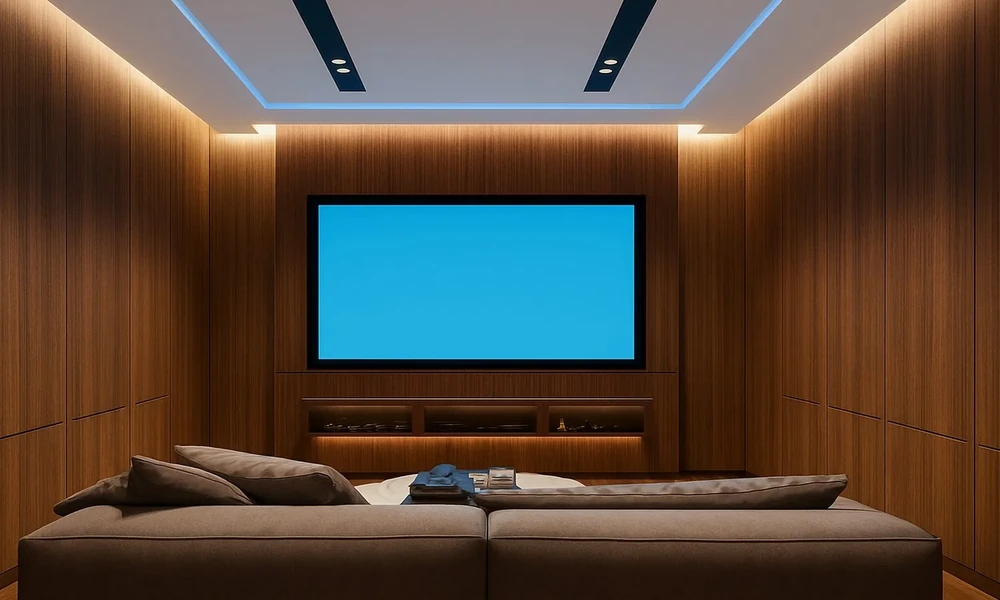

Home theatres require finishes that do not allow the light to bounce off the walls so that viewers can concentrate on what is happening on the screen. Light shining off glossy surfaces can be distracting as it reflects the light coming from a television, projector, and lights. Using the right laminates helps achieve color depth without giving up a modern appearance.
The use of laminates for home theatre walls implies combining low-gloss finishes with related shades and patterns so that a small room can be designed nicely and conveniently.
Why Use Matte Finishes in Home Theatres
Matte finishes are more effective compared to glossy looks as they do not reflect much light. For a home theatre, super matt laminates can be considered when a subdued, non-reflective surface is preferred.
Besides, all walls painted with the same color look dull. So the use of related colors is a good idea to bring depth into the design and highlight the screen. Some of the effective combinations of colours include:
- Charcoal gray and black: Create a modern look with subtle tonal variation.
- Dark walnut and graphite: Add warmth through wood grain textures while keeping the visuals subdued.
- Deep brown and warm gray: Contrast a rich, dark colour with a softer neutral tone.
- Muted navy and charcoal: Introduce hints of colour without giving it a tacky or gaudy look.
- Matte black and dark wood grain: Create a clean and simple look in between the screen, adding textured surfaces elsewhere.
In the scheme of dark acoustic media room laminate, co-ordinate them with the flooring, furniture, and lighting. In smaller spaces, dark finishes can be concentrated around the screen, with lighter complementary shades elsewhere to retain visual balance.
Planning Matte Black Screen Wall
The wall behind a television or projector screen is more often than not the focal point of a home theatre. A matte black wall panel can throw up a muted background and subsequently draw the viewer’s attention toward the screen. Black laminates can be used to create a deep, understated backdrop around the screen while complementing darker furniture and lighting.
This simple design should allow for some space between the panels and use subtle geometric patterns. There should be no excessive embellishment around the screen as this detracts from the viewing experience.
Only after working out the size of the television should you finalize your overall scheme, being mindful of speaker placements, wiring out of sight, and ventilation considerations. Make sure the panels fit together neatly without inhibiting access to electrical connections or other critical equipment.
Royale Touche features different decorative laminate finishes that can be looked into to knit together an overall design for a home theatre.
Acoustic Treatments Versus Matte Laminates: What’s the Difference?
Matte laminate is a decorative surface, definitely not a sound treatment. It can help reduce visual reflections, but it doesn’t automatically absorb sound or lower echo levels.
If you need better acoustic performance in the room, go for specially designed products like acoustic panels, bass traps, or fabric-wrapped sound absorbers. These can be incorporated with laminate finishes as long as the installation lets the acoustic materials function appropriately.
Planning the visual design and treatment separately helps to ensure that while a room is visually pleasing, the sound quality still remains suitable.
Lighting and Maintenance Considerations
Lighting plays a critical part in the looks of dark laminate surfaces. Even when matte, these surfaces can create highlights if there are any direct light sources. Indirect lights with dimmable fixtures can assist in controlling brightness while eliminating unwanted reflections.
Before you finalize a layout and treatment, won’t it be smart for you to check out laminate samples under the same light conditions as your room? Remember durability, the need for cleaning, and everyday use! Some debatable dark finishes can be prone to dust and smudge marks, so look for one that would be practical in terms of maintenance.
Conclusion
In lamination for the home theatre, one must strike the delicate balance between aesthetics, comfort, and active play. Dark colours and matte finishes set the mood of the cinema hall,while such wood grains create warmth and texture. With fine home theatre wall laminates combined with subtle yet perfect lighting and acoustic treatments, you would surely have an engaging and sophisticated entertainment space indeed.