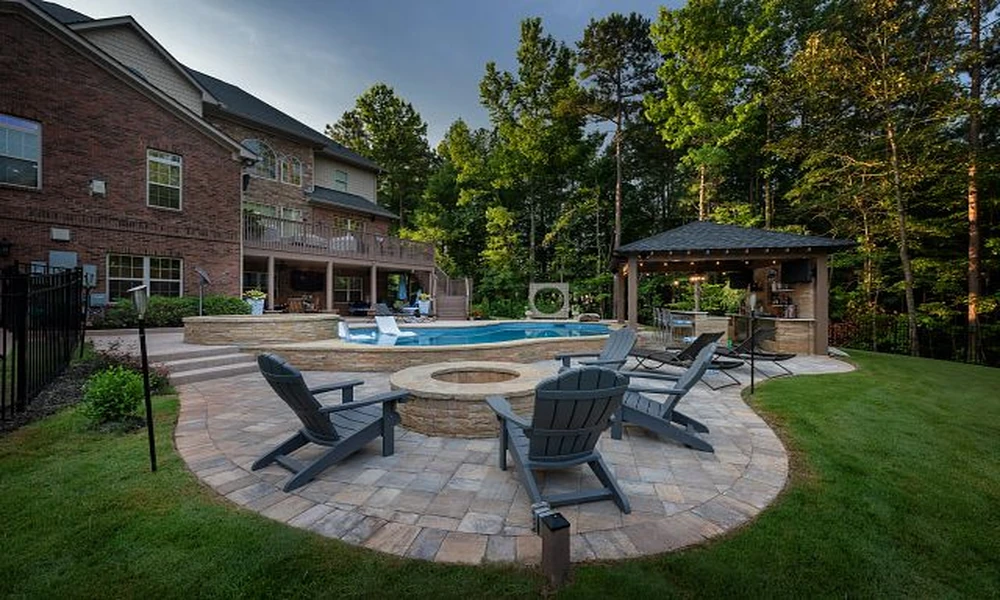

A backyard trampoline should never be used to launch someone into a swimming pool. If that suggestion appears while the family is imagining a new backyard, reject the activity before debating the layout. A proposed pool is not a reason to turn existing play equipment into homemade water-park equipment.
The suggestion can arrive casually. A child sees two enjoyable things in the same yard and imagines joining them into one game. An adult may respond by discussing whether they would fit beside each other, unintentionally allowing the jump to become a serious design premise. The important first response concerns the activity itself.
Say no to the jump before discussing the layout
The Montreal Children’s Hospital’s water-activities guidance explicitly says backyard trampolines are not recommended and should never serve as a launchpad into a pool. That is a clear answer to the proposed combination. It is not an invitation to find the one arrangement in which the family might try it.
Do not offer a trial jump, even as a demonstration of why the idea is unsuitable. The household does not need to reproduce the activity to justify declining it. A promise that someone will watch closely should not become a way to reopen the proposal.
Be equally clear about an online video. A clip can show that a person attempted something, but it does not establish that a backyard activity is appropriate. The viewer cannot turn an appealing sequence into a safe residential design by copying the visible relationship between two objects.
Adults should give the same answer rather than letting the child negotiate between different versions. One person saying never and another saying perhaps when you are older leaves the activity alive as a future expectation. The pool plan should not contain a deferred promise of a trampoline jump.
This does not require mocking the child’s imagination. A parent can acknowledge the enthusiasm, explain that this particular idea will not happen and continue the conversation about swimming. A firm boundary can coexist with a welcoming discussion of a new family space.
A deeper pool does not rescue the proposal
Once the activity is rejected, resist replacing it with a discussion of what depth might make it acceptable. That changes a clear decision into a technical guessing exercise. The household should not select a deeper pool, change its shape or imagine a different launch point to preserve this jump.
Depth is information about a pool, rather than a general permission for any activity someone can imagine above it. A dimension supplied for another purpose cannot authorise a homemade trampoline-to-water arrangement. Leave specialist aquatic design and instruction with the qualified people responsible for those subjects.
Health Canada’s trampoline safety guidance also says not to use a trampoline as a springboard to jump onto something else and identifies bodies of water among location hazards. Its advice reinforces the rejection of this combination; it does not certify the family’s existing trampoline or provide a layout for keeping it.
Similarly, do not turn a net, padding or another accessory into a reason to reconsider the launch. The proposed activity remains the same even if a product advertisement describes features of the trampoline itself. No accessory in this discussion establishes permission to leap into the pool.
Questions about retaining backyard equipment should be considered on their own terms, including the relevant manufacturer and safety guidance. This article’s refusal of a launchpad idea is not an endorsement of trampoline use elsewhere in the garden. Moving an object on a drawing does not resolve every issue associated with it.
Describe the swimming the family actually wants
After setting aside the jump, invite the household to describe an ordinary swimming occasion. Perhaps the children look forward to lessons translating into more confident swimming, while adults want time together outside. Keep the conversation attached to appropriate pool use and the family’s real expectations.
For a Mississauga project, planning the pool landscape with Jameson Pool & Spa can begin from those expectations. Tell the designer that a trampoline-to-water suggestion has been ruled out, rather than asking for it to be made workable. That prevents an attractive drawing from accidentally preserving the rejected activity as part of the family’s imagined future.
Children can still contribute useful preferences. They might describe wanting to spend more time outdoors or having friends visit. Listen to the underlying wish without treating every proposed game as a feature the pool must accommodate. The adults remain responsible for distinguishing an enjoyable goal from an unsuitable means of pursuing it.
Do not replace the trampoline jump with another improvised launch from a nearby object. A refusal loses its meaning if the family immediately begins searching for a different item from which to attempt the same activity. The design discussion can move forward without carrying that objective into another form.
Keep the same answer when friends come over
A clear decision during planning should remain clear after construction. Explain the rule to visitors in ordinary language before an idea becomes a challenge between children. An experienced swimmer or an older friend does not create an exception to the household’s rejection of a trampoline launch.
Maintain the appropriate adult supervision around the pool. Health Canada’s swimming guidance stresses close supervision, with young children and inexperienced swimmers kept in view and within arm’s reach in the water. A rule about one activity does not replace those ongoing responsibilities.
The family can look forward to its pool without keeping every imagined stunt in the plan. Let the new yard support swimming as intended, and keep the answer to the launchpad suggestion unambiguous. Nobody needs to attempt the jump, now or later, for the household to know it does not belong in this backyard.