
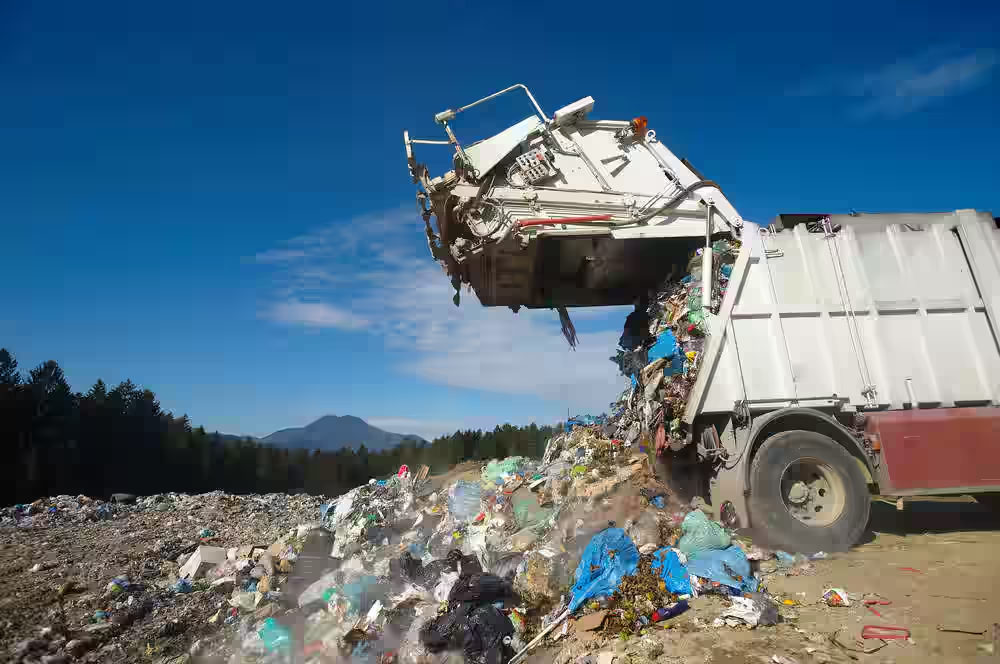

When you walk into a space with junk to clear piled ceiling-high, blocking doorways and consuming every available surface, you’re confronting more than a simple cleaning challenge. You’re staring down the accumulated weight of postponed decisions, abandoned projects, and the relentless march of consumption that defines modern urban life. I’ve seen it in cramped HDB flats where elderly residents can barely navigate their own corridors, in gleaming office towers where storage rooms have devolved into impenetrable mazes. The problem transcends demographics and property types. Clutter respects no boundaries. For those facing an overwhelming clear-out, services like Simps Junk Removal can provide the practical help needed to turn an unmanageable pile of belongings into a clean, usable space.
The Reality of Accumulation
Singapore’s compact living quarters make clutter problems particularly acute. In a three-room flat, a single broken appliance occupies significant percentages of available storage. Multiply that by years of accumulated possessions, and suddenly you’re living in spaces that feel more like warehouses than homes. I visited a Raffles Place firm where filing cabinets from the pre-digital era lined hallways, containing documents nobody had accessed in a decade. “We keep meaning to deal with it,” the office manager admitted, gesturing helplessly at the mess.
The pattern repeats endlessly. Intention exists. Action doesn’t follow. Junk to clear remains exactly where it sits, week after week, month after month, until some catalyst forces confrontation with the problem.
What Qualifies as Junk to Clear
The category encompasses surprising variety. During ride-alongs with disposal teams, I witnessed items ranging from mundane to bizarre:
- Obsolete office equipment including ancient photocopiers, dot matrix printers, cathode ray monitors from the 1990s
- Residential furniture with broken frames, torn upholstery, structural damage rendering them unusable
- Electronic waste comprising outdated computers, dead televisions, non-functional audio equipment
- Renovation leftovers such as tiles, timber offcuts, fixtures, hardware nobody will ever use
- Business inventory from closed operations or failed product lines gathering dust
- Accumulated paper filling boxes and cabinets despite digitization promises
One junk to clear operator recalled removing seventeen broken ceiling fans from a single shophouse. “The owner kept replacing them but never disposed of the old ones,” he explained. “They’d been accumulating for twenty years.”
The Quick Disposal Imperative
Speed matters. Whether preparing properties for sale, complying with landlord requirements, or simply reclaiming usable space, drawn-out clearance processes create extended disruption. Professional junk to clear services operate on compressed timelines that self-directed efforts cannot match.
I watched a two-person team empty a cluttered storeroom in under three hours. The homeowners had estimated the job would consume their entire weekend, possibly longer. Professional equipment, practiced technique, and experience create efficiency gaps amateurs cannot bridge.
Residential vs Commercial Clearance
Home and office junk to clear operations present distinct challenges. Residential jobs often involve emotional attachments. People hesitate over items connected to memories, even when those items serve no practical purpose. Disposal teams navigate these psychological dimensions with surprising sensitivity.
Commercial clearances typically proceed faster. Businesses approach junk to clear situations pragmatically, focused on restoring functionality rather than preserving sentiment. Yet offices present different complications: access restrictions, security protocols, after-hours requirements. One disposal specialist described clearing a law firm’s storage area at 2am because daytime disruption proved unacceptable.
The Decision Paralysis Problem
Confronting accumulated junk triggers decision fatigue. Each item demands evaluation: keep, donate, recycle, dispose? Multiply this by hundreds of objects, and the cognitive load becomes overwhelming. Many people simply freeze, unable to begin because the scope appears insurmountable.
Professional junk to clear in Singapore services provide external structure breaking this paralysis. Teams arrive at scheduled times, creating urgency and momentum. “We’re basically decision facilitators,” one operator told me. “People can’t start alone, but once we’re working, they make choices quickly.”
Cost Considerations
Affordability concerns delay action more than actual costs justify. Residents imagine expensive bills and keep living with dysfunction rather than investigating real pricing. Most junk to clear services charge based on volume or item count, providing predictable costs.
Basic clearances typically cost less than anticipated. Even comprehensive whole-property operations remain accessible for most budgets, particularly when balanced against the value of reclaimed space. In Singapore’s expensive property market, every square metre carries significant worth.
Environmental Angles
Modern junk to clear operations incorporate sustainability considerations that previous generations ignored. Responsible providers sort materials systematically, routing items toward appropriate destinations rather than defaulting to landfills.
A veteran operator walked me through their process: “Functional furniture goes to welfare organisations. Electronics get proper recycling through approved facilities. Metals, plastics, paper all get separated. We’re not just disposal workers anymore. We’re resource recovery specialists.”
Choosing Your Provider
Quality varies dramatically across junk to clear services. Research proves essential. Verify licensing and insurance. Check customer reviews across multiple platforms. Confirm environmental practices align with your values. Request detailed quotes specifying exactly what’s included.
Reputable providers offer transparency. They’ll visit properties for accurate assessments rather than guessing over phone conversations. Red flags include vague pricing, reluctance to answer questions, or absence of proper credentials.
The Transformation Moment
Clients consistently describe profound relief following clearances. Spaces transform from oppressive to functional within hours. The psychological burden accumulated items create vanishes with their physical removal. I’ve seen people literally tearful after watching years of clutter disappear.
One Ang Mo Kio resident compared it to recovering from illness: “I didn’t realize how much that mess was weighing on me until it was gone. Suddenly my flat felt like home again instead of some storage facility I happened to live in.”
Whether confronting residential chaos or office dysfunction, whether motivated by necessity or simply reclaiming quality of life, solutions exist. Professional services combine speed, efficiency, and environmental responsibility that DIY approaches cannot match. The gap between living with dysfunction and enjoying clear, functional spaces narrows to a single decision: making that call, scheduling that appointment, finally addressing the junk to clear.